Skip to content
Computer Science @ UFMG • Cybersecurity • AI • Networks

Vinicius Trindade

Computer Science student (UFMG) and undergraduate researcher at the Wireless Networks Lab (WiNet/UFMG) and the CCSC Research Lab (UFMG), focused on cybersecurity, AI (reinforcement learning), and computer networks. Former Brazilian Army officer (Second Lieutenant): commanded platoon-level units in operational routines and led administrative sections, spending more time in the finance section.

About

  • I work and research in cybersecurity, AI (reinforcement learning), and computer networks.
  • Hands-on experience with C/C++, Python, SQL, and Git/GitHub; familiar with web development.
  • Methodologies: knowledge of Scrum and Kanban for organizing and tracking work.
  • Architecture: knowledge of microservices, monolithic applications, and MVC.
  • Interested in game development and robotics, exploring these areas through personal projects.
  • Soft skills: leadership, discipline, organization, responsibility, selflessness, and teamwork.

Research

Undergraduate Research (IC)

Oct 2024 — Apr 2026 (volunteer: Oct 2024 — Apr 2025 • CNPq scholar: May 2025 — Apr 2026)

An Opportunistic Key Exchange Scheme for Location Information Sharing on UAV Networks Resilient to MiM Attacks

As unmanned aerial vehicles (UAVs) demand wireless technologies for their communication, they become prone to serious security threats that aim to compromise the integrity and confidentiality of the exchanged control data, standing out man-in-the-middle (MiM) attacks as one of the most damaging. Besides, UAV networks require essential critical services for their regular operation, like the UAV location service. Key exchange is one way to protect UAV communications against MiM attacks. This paper proposes KEYSUAV, a key exchange scheme to enable a resilient location information sharing on UAV networks against MiM attacks. KEYSUAV relies on opportunistic approaches and on the lightweight cryptographic standard ASCON, an algorithm designed for resource-constrained devices like UAVs. Simulation results show that KEYSUAV over the FlySafe system detected 100% of compromised messages sent by a MiM attacker with a slight reduction in UAVs’ spatial awareness, around 4.5%, thus fostering the resilience of the location service for UAV networks.

Publication

A. Batista, V. Trindade, and A. Santos, “An Opportunistic Key Exchange Scheme for Location Information Sharing on UAV Networks Resilient to MiM Attacks,” in Anais do XLIV Simpósio Brasileiro de Redes de Computadores e Sistemas Distribuídos, Praia do Forte/BA, 2026, pp. 141–154, doi: https://doi.org/10.5753/sbrc.2026.19890.

Supervision

PhD Agnaldo de Souza Batista — Co-advisor (UFPR)
UAV NetworksCybersecurityMiM Attackns-3CNPq

Undergraduate Research (IC)

May 2026 — Apr 2027 (CNPq scholar)

MiM Attack Detection and Identification in Location Sharing Service for FANETs with MARL

The safe operation of UAV networks depends on critical infrastructure systems with high levels of robustness, reliability, and security during their operation. The location sharing service is pivotal to UAVs have spatial awareness of the network, thus supporting the execution of various critical systems. However, this service is subject to man-in-the-middle (MiM) attacks that aim to disrupt its operation. This paper presents CIRRUS, a distributed mechanism in which multi-agent reinforcement learning (MARL) under centralized training and decentralized execution (CTDE) detects such attacks and identifies the attacker behind the identity of its victims, and a consensus among neighbors corroborates each identification. Over FlySafe, CIRRUS detected 99.67% of the forged location messages, identified the MiM in all simulations with 0.36% of false alarms, and held the location error at 0.50m, against 3.55m under attack.

Supervision

PhD Agnaldo de Souza Batista — Co-advisor (UFPR)
FANETsCybersecurityMiM AttackMARLCTDECNPq

Course Project — Wireless Networks

Mar 2026 — Feb 2027

Multisource Dual Path Same Parity Routing (MDPSPR)

Wireless sensor networks now carry multimedia and streaming traffic that demands high throughput. Dual-radio platforms answer this demand, and the dual-path same-parity protocol moves data over two node-disjoint paths of equal hop-count parity, so that source and destination use both radios at once, but only for a single source/destination pair. This work extends dual-path same-parity routing to multiple simultaneous source/destination pairs. We formulate the joint routing as an integer linear program with node exclusivity across pairs, including a variant that maximizes the number of admitted pairs before minimizing route cost, design greedy heuristics with different pair-ordering rules, and add a geometry-based channel assignment. The protocol is evaluated in ns-3.38 with real UDP and TCP traffic over IPv6/6LoWPAN and IEEE 802.15.4, measuring admission, goodput, delivery and delay as demand, topology and transport vary. The work started as a course project in Wireless Networks and is being prepared for publication at the professor’s invitation.

Supervision

Co-authorship

Gustavo Ferreira Dias — Second author (UFMG)
Wireless Sensor NetworksDual-RadioRoutingILPns-3

Undergraduate Final Project (TCC)

Aug 2026 — Jul 2027

MitM Detection and Identification in Local Consensus Services for FANETs with MARL

UAV swarms organized as FANETs rely on local consensus services, in which each UAV updates a shared state through exchanges with its neighbors; clock synchronization is the application case studied here. Because control messages carry no authentication, a man-in-the-middle (MitM) attacker that belongs to the swarm can capture a neighbor’s consensus message, alter the value it carries and reinject it under the victim’s identity, and the convergence mechanism itself then propagates the corrupted value through the whole connected component. The defense uses multi-agent reinforcement learning (MARL) under centralized training and decentralized execution (CTDE) to detect that attack and identify the UAV responsible for it: each UAV carries its own agent and decides using only the information available in its neighborhood, labeling every message so that a forged contribution is dropped before the service absorbs it, and pointing out the attacker. The service and the defense are built on ns-3.38 with ns3-ai and evaluated with 40 UAVs in a sparse, permanently partitioned topology.

FANETsCybersecurityMitM AttackConsensusMARLns-3

Projects

Scroll to explore →

Caixinha

Group expense-splitting app developed with a partner. In progress; link not available yet. Component-based setup: Front-Caixinha (React/Vite SPA, UI/UX and API consumption), Api-Caixinha (NestJS + TypeScript, Prisma + PostgreSQL, authentication/authorization and business rules), and Mobile-Caixinha (React Native, mobile UI and consumption of the same API). Google login.

ReactViteReact NativeNestJSTypeScriptPrismaPostgreSQLOAuthGitHub Actions

Animae

Indie 2D Metroidvania game developed solo, focused on connection with nature and rebuilding a devastated world. In progress; link not available yet.

C++SDL2OpenGLGame Dev2D

Personal website (this site)

Static portfolio built with Astro + Tailwind, designed to be fast, accessible, and easy to maintain (GitHub Pages).

AstroTailwindGitHub PagesGitHub Actions

1 / 3

Experience

Undergraduate Researcher

Oct 2024 — Apr 2027 (volunteer: Oct 2024 — Apr 2025 • CNPq scholarship: May 2025 — Apr 2027)

Wireless Networks Lab (WiNet) & CCSC Research Lab — UFMG • Advisor: Prof. PhD Aldri Luiz dos Santos

  • Project: “CiberComUAV — Cybersecurity in the Communications of UAV Aerial Networks”.
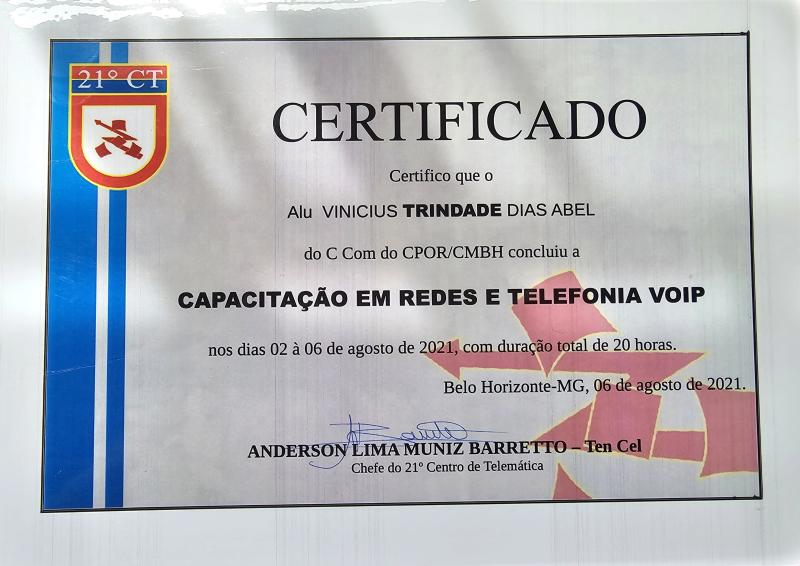
  • Applied research in network security with simulation in ns-3.

View details

Second Lieutenant

Dec 2021 — Jun 2023

Brazilian Army — 4th Light Mountain Signals Company

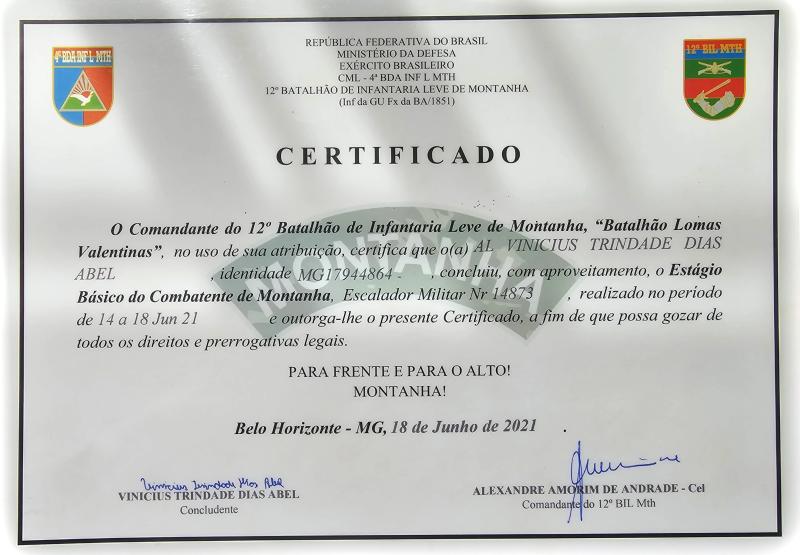
  • Commanded platoon-level teams and coordinated readiness, training, and operational routines.
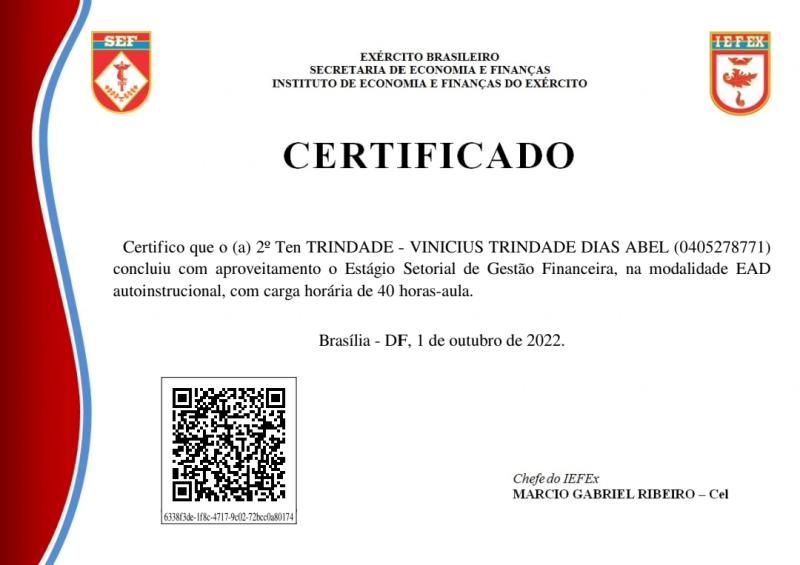
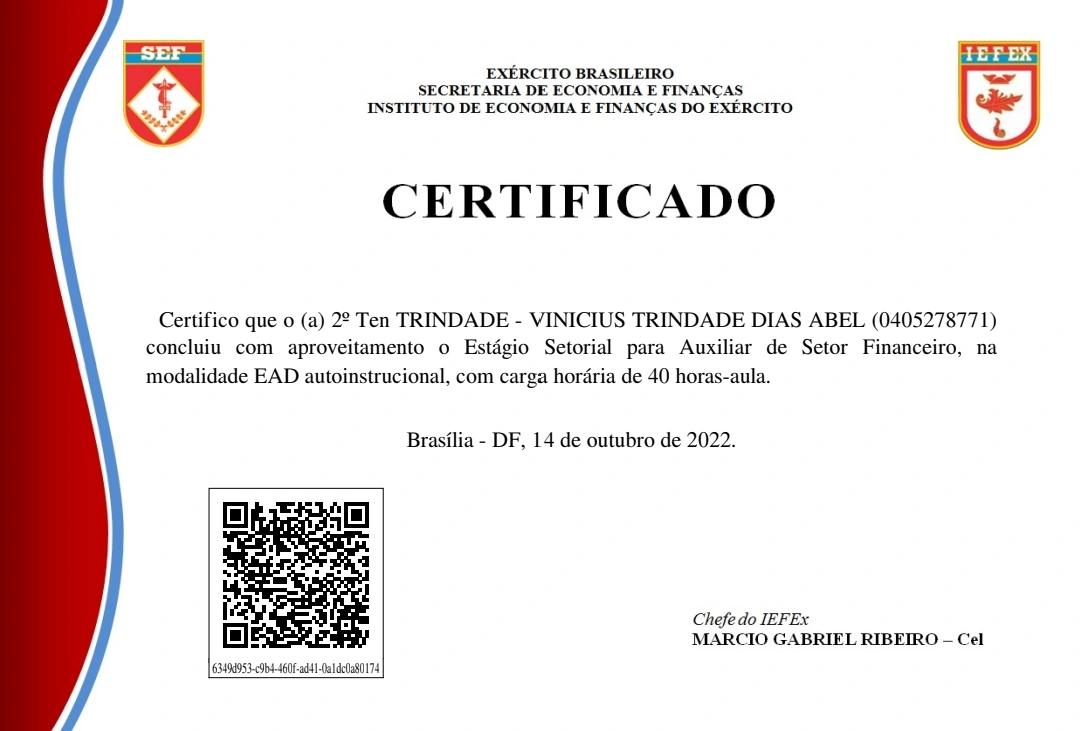
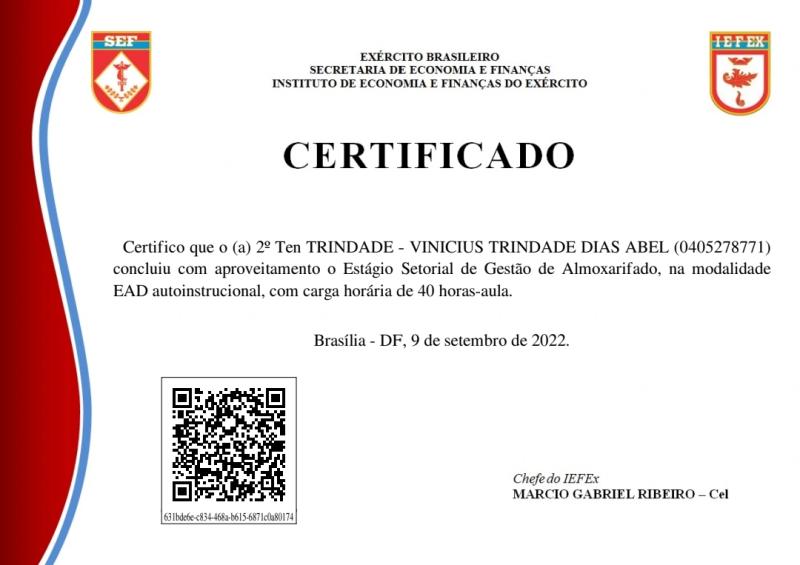
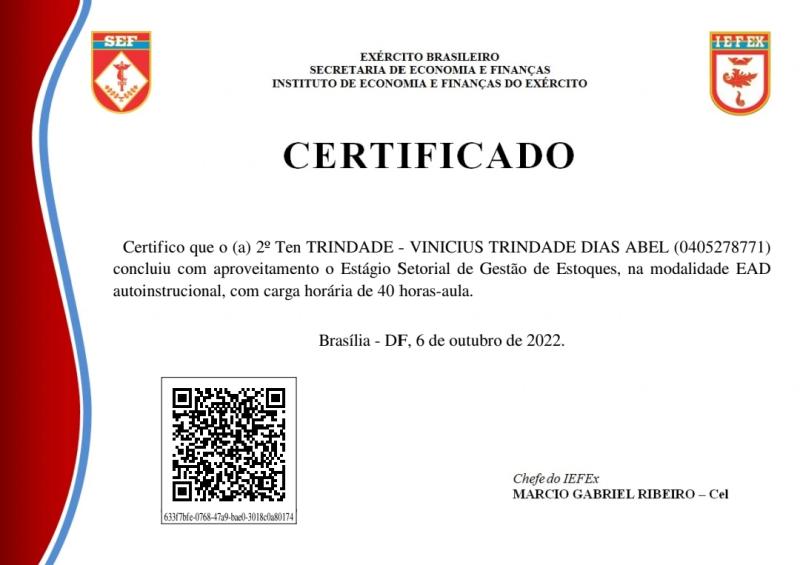
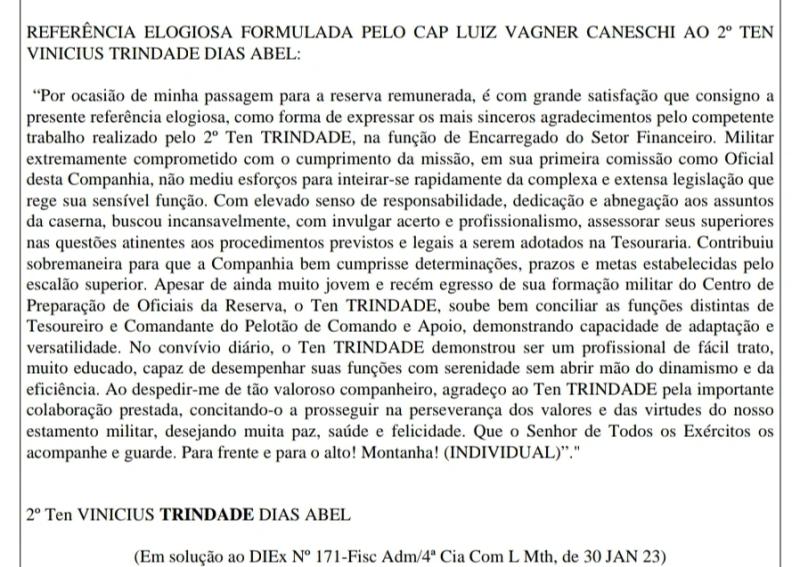
  • Led administrative sections across operations, logistics, and finance, spending more time in the finance section.
  • Delivered instruction in courses and training programs, supporting the development of soldiers and corporals.

Officer Candidate

Feb 2021 — Dec 2021

CPOR-BH

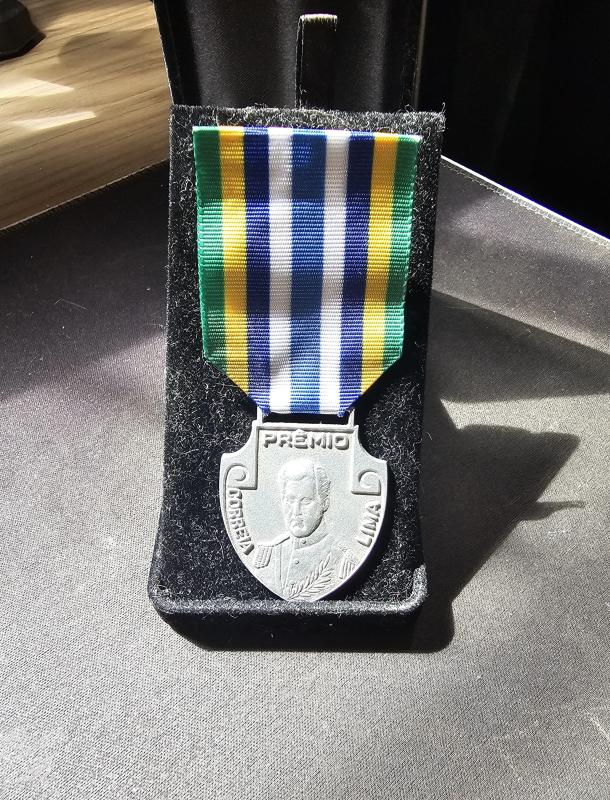
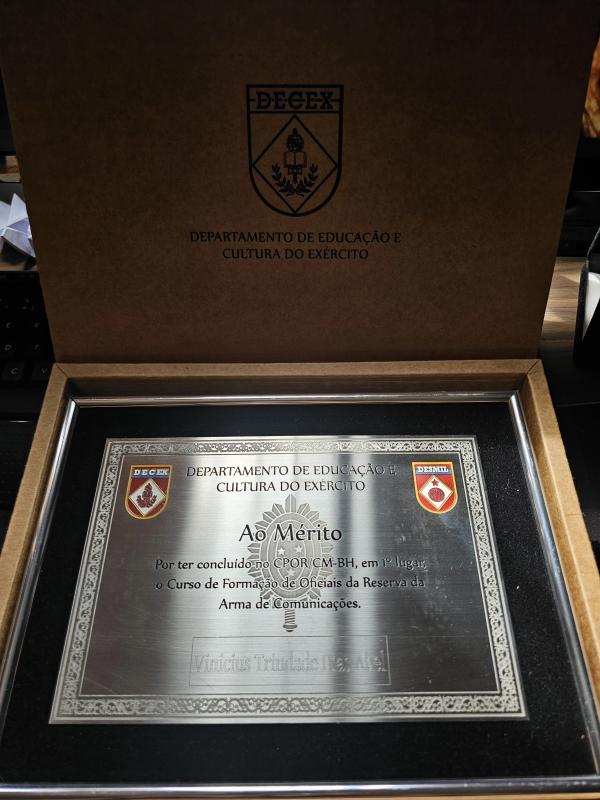
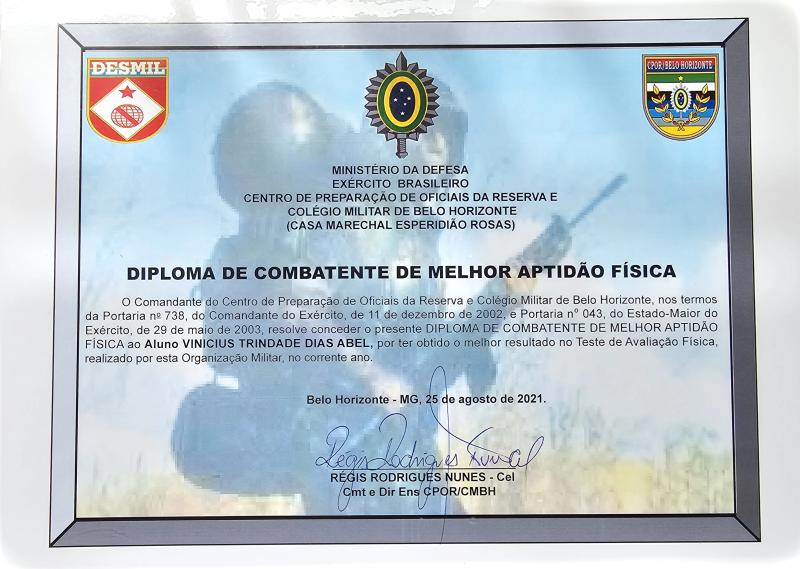
  • Military leadership training; top academic performance.

Trainee

Aug 2020 — Jan 2021

iJunior UFMG — Junior Enterprise

  • Exposure to project delivery, teamwork, and client-oriented work.

Education

🎓

B.Sc. in Computer Science

Federal University of Minas Gerais (UFMG)

2020 — Present

🎓

Technical Degree in Building Construction

Federal Institute of Minas Gerais (IFMG)

2017 — 2019

Certificates

Swipe or drag → click any card to view

Achievements

© 2026 Vinicius Trindade. All rights reserved.